Salt damp and rising damp across Adelaide
Adelaide calls it salt damp. It is the same thing as rising damp, with a harsher ending. Groundwater climbs the base of a wall. The summer dries the wall out. The salt the water carried stays behind. We connect Adelaide owners with independent damp specialists, and we arrange an on-site assessment that puts the cause in writing before anyone quotes a repair.
These are the six things Adelaide owners describe when they ring. If you can see any of them low on a ground-floor wall, get a full assessment from a damp specialist. They meter the wall inside and out, check the ground levels around it, and put the cause in writing. Do that before anyone quotes a repair.
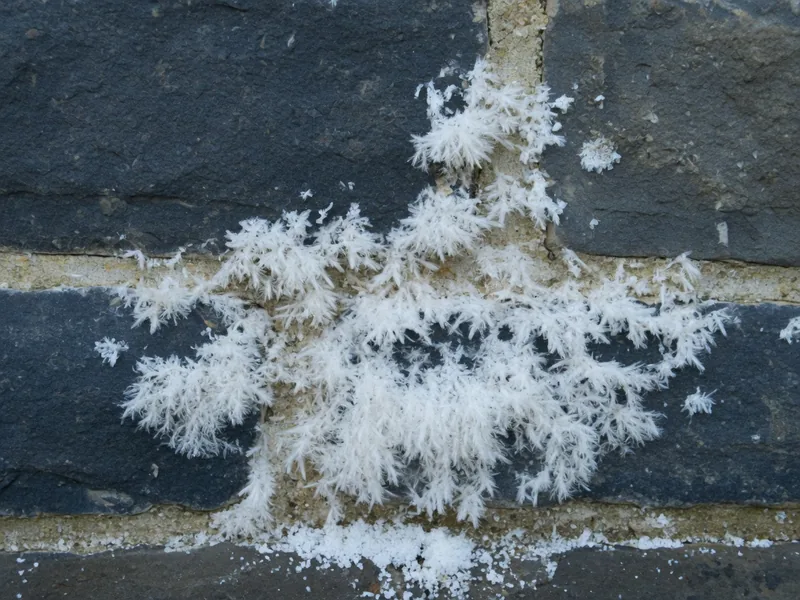
Efflorescence. The salt the water carried up and left behind when it evaporated. Brushing it away treats the symptom and nothing else — it returns because the water still does.
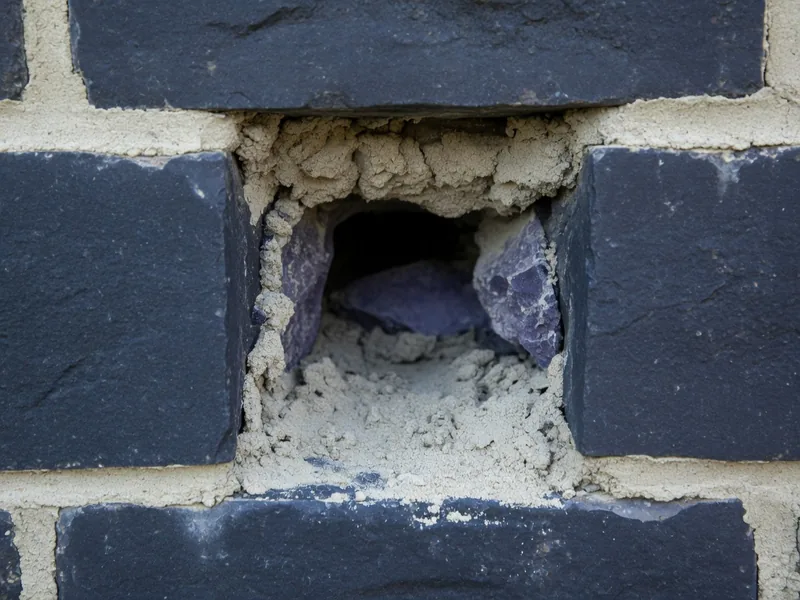
On bluestone this is usually the first real sign. The salt crystallises inside the joint and pushes the lime mortar apart from within until it has no strength left.
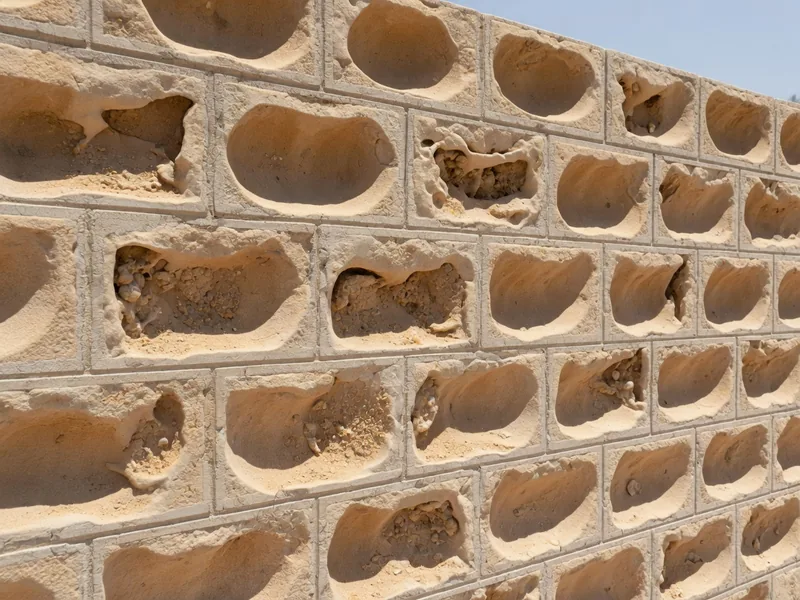
Sandstone fretting. The face of the stone spalls away while the joints stand proud. It is slow, expensive and cannot be reversed, so it tells you the problem has been running for years.
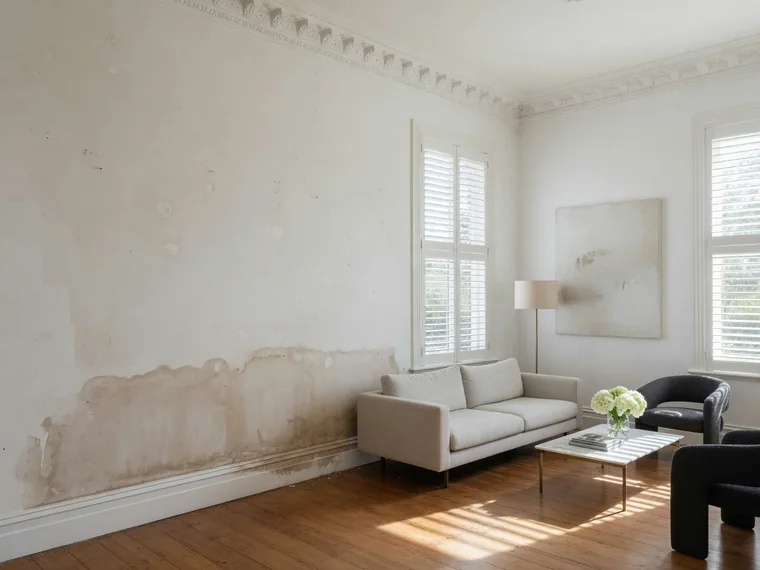
Paint or plaster failing along a horizontal line, usually under a metre. Level is the giveaway — water from a leak runs down and makes a patch, not a straight edge.
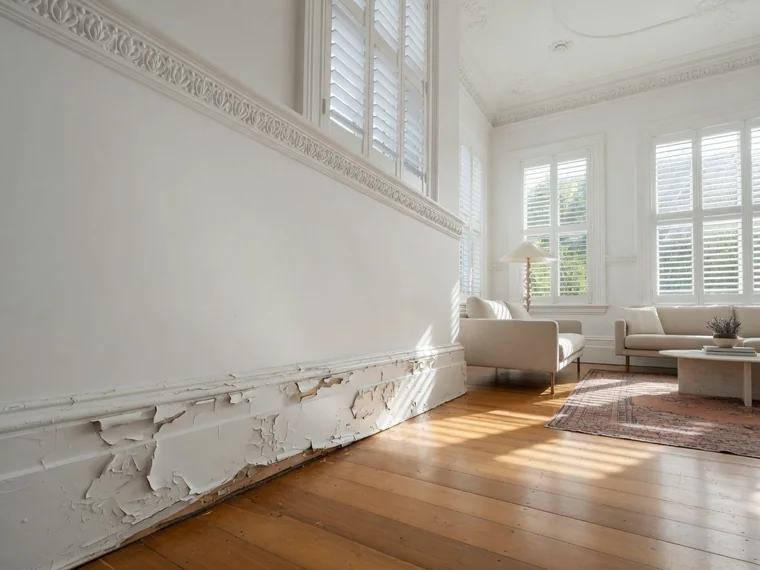
Timber in contact with a wet wall. By the time a skirting is spongy the wall behind it has been wet for a long time.
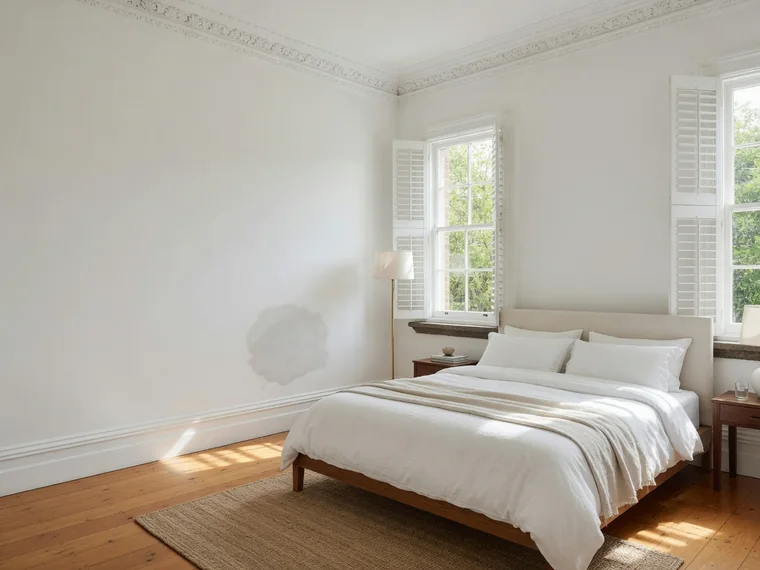
Particularly a south-facing room in winter. Damp masonry smells before it looks like anything, and people usually notice it after being away for a week.
It is not that Adelaide is wet. The city records about 540.6mm of rain a year across 82.0 days. That is a dry city by Australian standards. What Adelaide has is the cycle. A wet, cool winter is followed by a hot dry summer that pulls the moisture straight back out of the stone.
Each time that happens, the water evaporates from the face of the wall. The salt it was carrying stays behind inside the masonry. Do that for a hundred summers and the crystals build up. A growing salt crystal inside a joint or a pore pushes hard. That pressure is what turns lime mortar to sand and takes the face off sandstone. The damage is done by the drying, not by the wetting. It is why the same wall fails faster here than it would in a wetter, milder city.
| Month | Rainfall | 9am humidity | 3pm humidity | Mean max |
|---|---|---|---|---|
| January | 20.1 mm | 53% | 36% | 29.6 °C |
| February | 16.1 mm | 54% | 36% | 29.5 °C |
| March | 25.9 mm | 58% | 41% | 26.5 °C |
| April | 39.5 mm | 61% | 47% | 22.8 °C |
| May | 61.4 mm | 71% | 55% | 19.0 °C |
| June | 78.1 mm | 79% | 61% | 16.1 °C |
| July | 75.3 mm | 78% | 60% | 15.4 °C |
| August | 67.7 mm | 70% | 55% | 16.6 °C |
| September | 58.5 mm | 62% | 51% | 19.1 °C |
| October | 40.9 mm | 55% | 45% | 22.2 °C |
| November | 29.6 mm | 54% | 40% | 25.3 °C |
| December | 28.4 mm | 52% | 39% | 27.4 °C |
Source: Bureau of Meteorology, Adelaide (Kent Town), station 023090. Annual rainfall 540.6mm across 82.0 days of rain of 1mm or more.
Look at the February and June rows together. Almost all the rain falls between May and September. Then the 3pm humidity drops to 36 per cent with a mean maximum of 29.5 °C. That is the engine.
Every figure in that table is the Bureau of Meteorology thirty-year average for station 023090, not our estimate.
Any house can get it. What changes is why, and what the repair is.
The material decides where the water travels. That decides what the repair actually is. Adelaide has four broad groups. The older two usually have no working damp course. The newer two nearly always have one, and still get damp when the ground outside ends up higher than it.
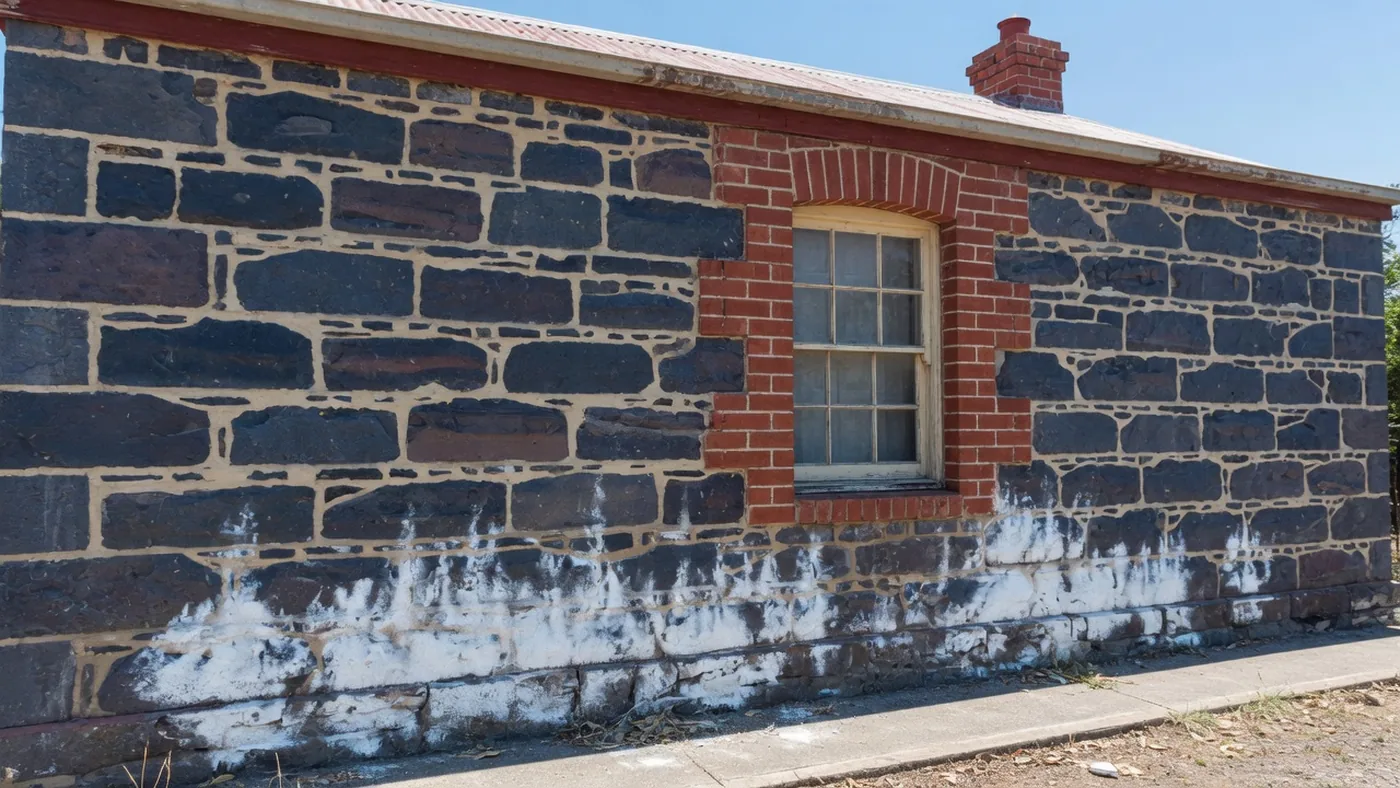
The Adelaide signature. Bluestone is dense basalt and does not absorb much itself — the water travels up the wide, soft lime mortar joints between the stones. So a bluestone wall can look perfectly sound while the mortar between the courses has gone to sand. It is also why repointing it in hard cement makes the problem worse, not better.
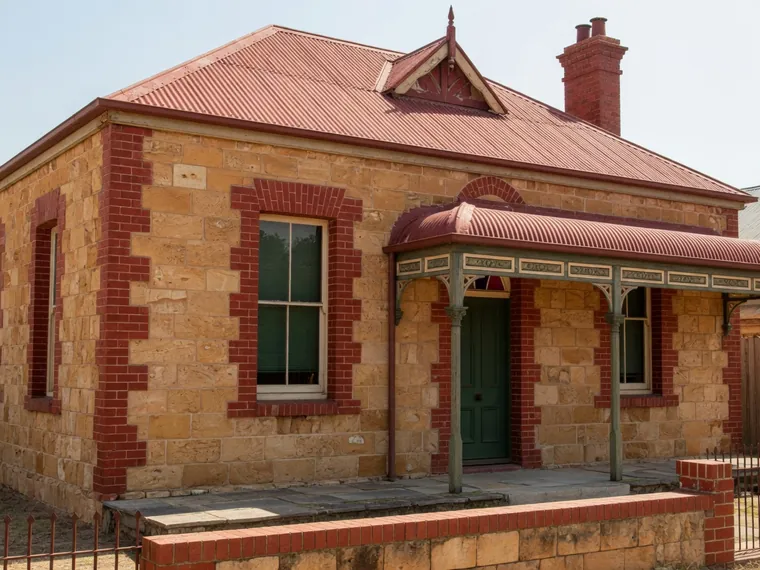
Often with red brick quoins at the corners and around openings. Sandstone is porous. Unlike bluestone it takes the water into the stone itself, and it fails at the face. The surface dishes, flakes and drops away, while the mortar joints stand proud.
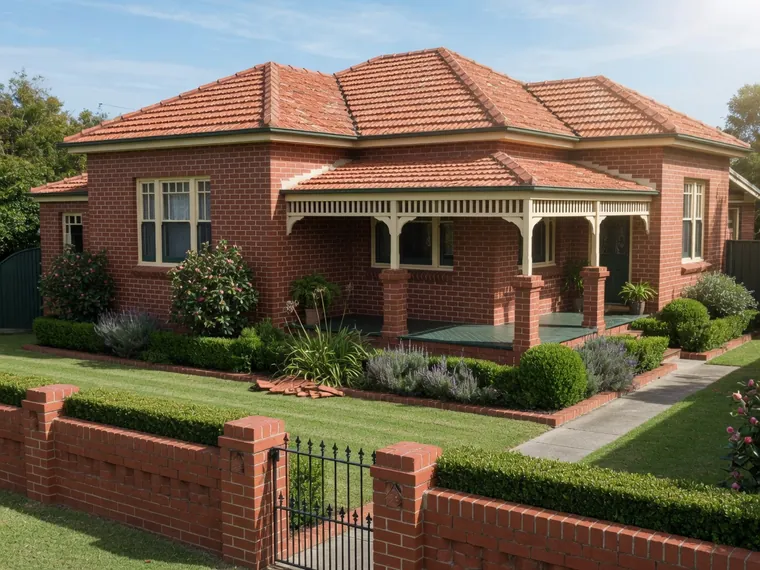
These generally do have a damp course, slate or bituminous felt. So the question is not whether one exists. It is whether it has cracked, been rendered over, or been bridged by a path or garden bed added later. Different question, different repair, usually cheaper.
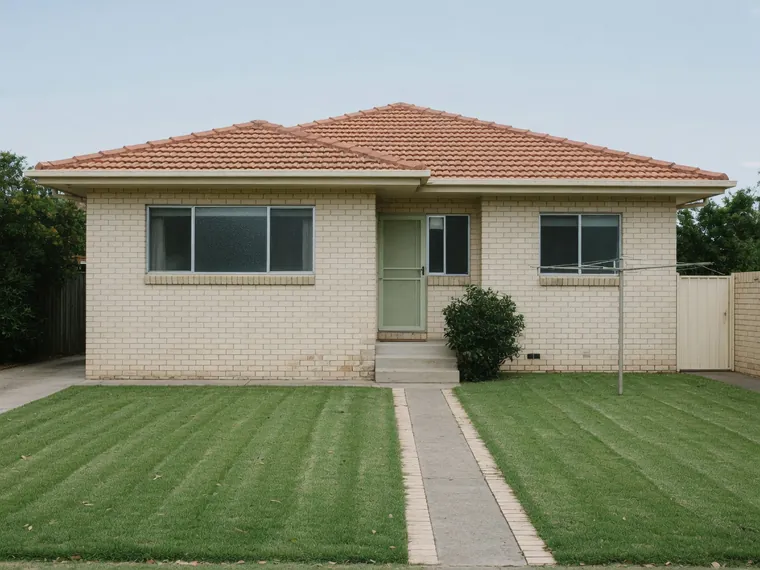
A damp course exists and is rarely the fault. Damp at the base of one of these is almost always a bridged course, a failed shower or a leaking service. Rule those out before anyone talks about injecting anything.
Five different faults all produce a wet wall. Rising damp. A bridged damp course. Lateral damp off a slope. A plumbing leak. Plain condensation. In Adelaide the reactive clay adds a sixth. A damp course can be sound when it is laid, then crack as the ground moves under it.
Those six need different repairs, and they cost wildly different amounts.
An assessment sorts out which one you have. Someone meters the wall at several heights. They check the ground levels outside against the floor inside. They rule out plumbing. Then they put the answer in writing. That document is what lets you judge a quote instead of trusting one. It is also what stops you paying for a damp course when the real problem is a garden bed.
Real ranges, published. Most trades will not put a number on a page, which is precisely why this one is here.
| Work | Indicative range | What it covers |
|---|---|---|
| On-site assessment and written diagnosis | $450 plus GST | Arranged through us. The specialist tells you the fee before anything is booked, and you get the cause in writing before anyone quotes a repair. |
| Independent damp report for a purchase or dispute | $400 – $700 | A standalone technical report. Worth it inside a cooling-off period or where two parties disagree. |
| Correcting ground and paving levels | $900 – $3,500 | Cutting back paths, garden beds and paving that bridge the damp course. Frequently the whole fix, and always the first thing to check. |
| Chemical damp course injection | $180 – $260 per metre | Installing a new damp course into a wall that never had one, or replacing one that has failed. Bluestone costs more per metre than brick because the joints are wider. |
| Repointing in lime mortar | $120 – $220 per square metre | Raking out failed joints and repointing in a lime mix that lets the wall breathe. Cement pointing on old stone traps water and accelerates the damage. |
| Salt-retardant render and internal replaster | $90 – $180 per square metre | Removing salt-contaminated plaster and replacing it. Done too early it simply fails again, so it belongs at the end of the job, not the start. |
| Full treatment, typical bluestone cottage frontage | $6,000 – $18,000 | Injection, drainage and levels, repointing and replaster together. The range is wide because access and the amount of stone repair vary enormously. |
Prices are indicative ranges only. Every fixed price quote follows an on-site assessment.
Step 1
A short description and a photo or two of the worst wall. Most of the time that is enough for us to say whether an assessment is worth your time.
Step 2
About an hour. Moisture readings taken through the wall at several heights, inside and out, plus the ground levels, the drainage and any plumbing that runs nearby.
Step 3
Which mechanism is at work, how far it extends, and what is causing it. This is the document worth having — it is what lets you judge a quote instead of trusting one.
Step 4
Itemised, so you can see what is drainage, what is damp course, what is stone repair and what is finishing. You are free to take it elsewhere.
Step 5
Levels and drainage first, then the damp course, then stone and mortar, and plaster last. Out of order the finish fails and gets blamed on the treatment.
Step 6
Masonry takes months to give up its moisture, and salt keeps coming to the surface while it does. Replastering too early is the most common way a good repair looks bad.
The Adelaide word for it, what makes it different from plain rising damp, and why this city gets the worst of it.
Salt dampWhy the joints fail before the stone does, and why repointing in cement makes it worse.
Bluestone repointingWhen the face of the stone starts dishing and powdering away. The expensive failure.
Sandstone frettingInstalling a damp course into a wall that never had one, and what it costs in stone versus brick.
DPC injectionPaths and garden beds that bridge the damp course. Often the whole fix, and the cheapest one.
Damp proofingAdelaide soils move more than most, and that movement cracks damp courses that were perfectly good.
Clay and movementSemaphore, Glenelg and the Port, where the groundwater carries salt of its own.
Coastal stockThey look similar on a wall and the fixes have nothing in common.
Telling them apartWhat to check before you commit, and what a building report will and will not tell you.
Pre-purchase checksWhy black mould here is usually condensation rather than salt damp, and what to try before paying anyone.
Damp and mouldRising damp is groundwater soaking up into a wall from the soil underneath it. Stone, brick and mortar are full of tiny holes. Water climbs those holes the same way it climbs up a paper towel. It stops about a metre up, where it dries off the wall as fast as it arrives. That is why the mark is a level line and not a patch.
It is the same thing with a local name and a worse ending. The water rises the same way. What is different in Adelaide is what happens next. The summer drives the water back out of the wall, and the salt it was carrying stays behind. Over enough wet and dry cycles the salt crystals do the damage, not the water.
Salt damp only happens on ground-floor walls, and it makes a level line about 600mm to 1.2m up. A leak makes a patch, usually higher, and usually worst after rain. Condensation shows up on cold surfaces and in corners, and it is worst in winter. A moisture meter and a look outside settle it in about an hour. Guessing is what costs people money.
A damp course is a waterproof layer built into a wall, just above the ground. It stops water climbing any higher. Older Adelaide houses were built with slate or bituminous felt. Many of the oldest have none at all. A damp course can also fail with age, or be bridged, which means water found a way around it.
Yes. In a newer house the usual cause is that the ground outside has ended up higher than the damp course. A concrete path, a raised garden bed, a slab, a re-levelled yard — any of those lets water walk straight around the barrier. This is usually the cheapest kind to fix, because the fix is outside the house.
Yes, and this is the most common misread in Adelaide. Bluestone is dense and does not take up much water itself. The water travels up the soft lime mortar between the stones instead. So the stone can look sound while the mortar has gone to sand. Poke a joint with a key. If it crumbles out, that is your answer.
No. This is the single most expensive mistake made on Adelaide stone. Hard cement will not let the wall dry through the joint. The water and the salt then leave through the face of the stone instead, and the stone is what fails. Lime mortar is soft on purpose. It is meant to be the part that wears.
Damp walls grow mould. SA Health says mould indoors can trigger a blocked nose, sneezing, coughing and wheezing. It is worse for people with asthma, allergies, or a weakened immune system. Cleaning mould off the surface does not fix it while the wall is still wet.
No. A dehumidifier dries the air in the room. Salt damp keeps feeding water into the wall from the ground. The machine can make a room more comfortable while you sort the real cause out. It will not stop the water coming up.
Painting or rendering over damp is the most common mistake we see. A sealed coating traps the water in the wall instead of letting it dry outwards. The coating then lifts off in sheets, often worse than before, and the salt comes with it. Fix the water first, let the wall dry, then finish it.
Not usually, and this is why people think a damp course has failed when it has not. A new course stops more water arriving. It does nothing about the salt already in the wall. Salt pulls moisture out of the air by itself, so the wall keeps reading damp and keeps marking the new plaster. The salty render has to come off as well.
Injecting a new damp course runs about $180 to $260 a metre. Repointing in lime mortar is about $120 to $220 a square metre. Salt-retardant render and replaster is about $90 to $180 a square metre. Sometimes the answer is only drainage and ground levels, at about $900 to $3,500, and that is often the whole fix. Every fixed price quote follows an on-site assessment.
The physical work is usually a few days. The drying is the long part. A wall dries at roughly one month for every ten millimetres of thickness. A double stone wall can take most of a year before it is ready to finish. Finishing early undoes the work.
Usually not. Australian home policies commonly exclude gradual damage, wear and tear and lack of maintenance, and salt damp falls into that group. A sudden event is treated differently — a burst pipe, for example, is often covered. Read your own policy wording, and ask your insurer before you assume either way.
Yes. Building work in South Australia is licensed by Consumer and Business Services (CBS). We only refer specialists who hold the licence their work needs. You can ask for the licence number and check it yourself on the CBS register. A legitimate operator will not mind.
Yes. A building inspector will normally find it, and a buyer will ask for a price reduction or walk away. A written assessment is useful either way. If you are selling, it shows what the real problem is and what it costs. If you are buying, it stops you guessing at a number.
It matters a great deal, and it is often mistaken for damp. Reactive clay swells when wet and shrinks when dry. That movement cracks walls and footings. A crack then lets water in. So the two turn up together, but they are different problems with different repairs. An assessment should tell you which one you are looking at.
The oldest stone stock sits in the inner ring and along the coast, and that is where most of the calls come from.
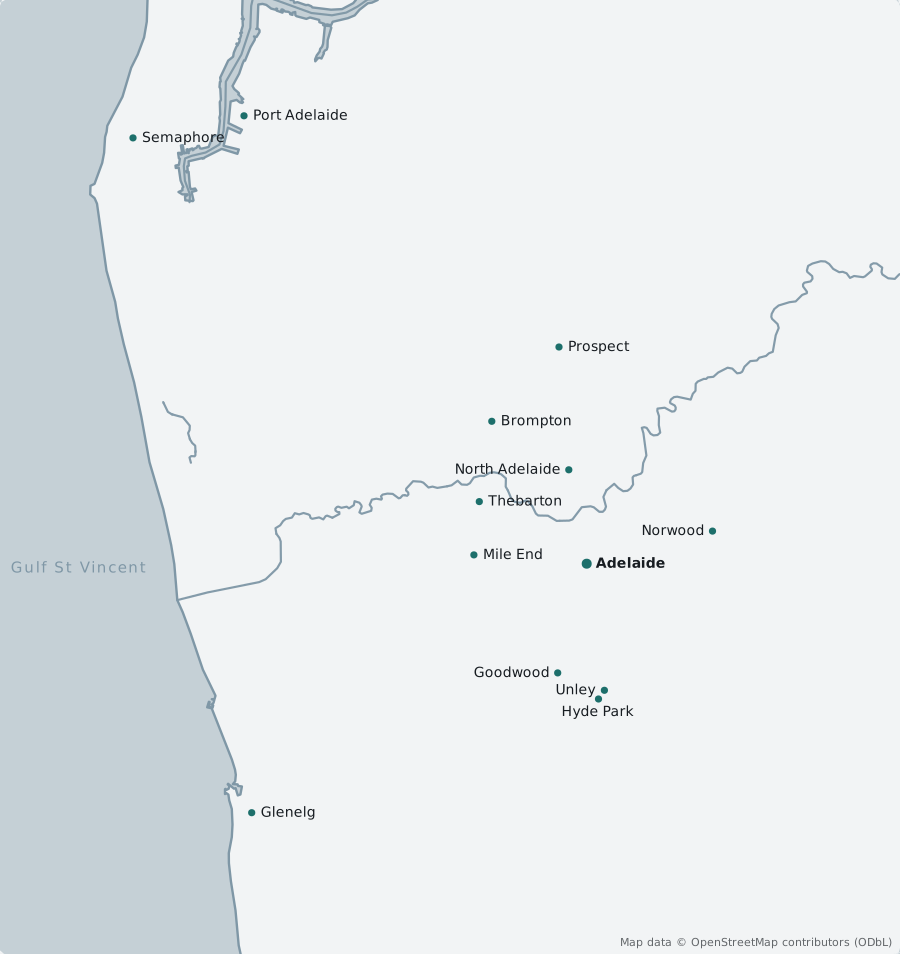
Tell us what the wall is doing. We will arrange someone to meter it and put the cause in writing.