Before anyone quotes
About an hour, inside and out, and it ends with a written answer rather than a price.
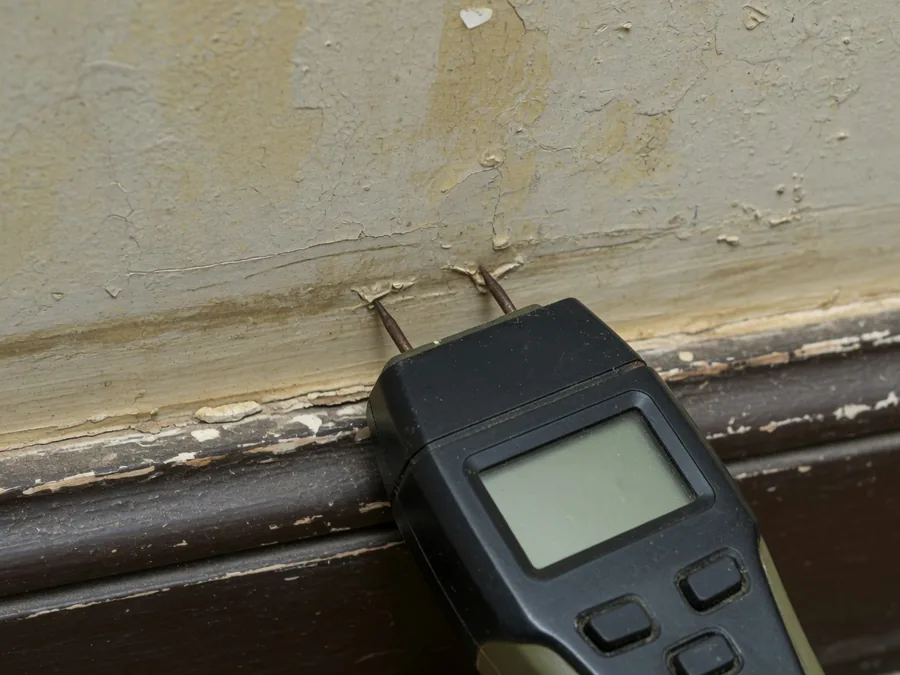
Rising Damp Adelaide arranges the assessment; an independent licensed specialist carries it out. The point of it is diagnosis. A quote tells you what something costs; an assessment tells you whether you need it.
Readings up the wall, not one reading at skirting level. The profile is what identifies the mechanism — rising damp gives a gradient that falls with height and stops at a line.
A surface meter can read wet on a wall that is dry behind, which is condensation. Deep readings distinguish the two and this is the single most common misdiagnosis.
Measured, not eyeballed. If the outside sits above the inside, that is a finding regardless of what else is wrong.
On bluestone especially. Joints are raked and tested, because the stone can look perfect while the mortar has lost all strength.
Downpipes, stormwater, and any wet area or service on the other side of the wall. Ruling these out is cheap and occasionally ends the job on the spot.
Whether there is efflorescence, where it sits relative to the tide mark, and whether existing render or plaster is already contaminated.
A written diagnosis naming the mechanism, its extent, and the cause. If more than one thing is going on — which in Adelaide is common, because a bridged course and reactive clay movement often coexist — it says so and separates them. Then an itemised quote, so drainage, damp course, stone repair and finishing are individually priced and you can see what you are agreeing to.
Roughly when it started and whether anything changed around the same time — paving laid, a garden bed built up, work done next door, a bathroom renovated. Any building report if you have one. And if you can, let the room be closed up rather than aired beforehand; a ventilated room hides the smell that is often the most useful early clue.
The oldest stone stock sits in the inner ring and along the coast, and that is where most of the calls come from.
Tell us what the wall is doing. We will arrange someone to meter it and put the cause in writing.