Telling them apart
They produce similar-looking walls and share no repair at all. Getting this wrong is the most expensive misdiagnosis in the trade.
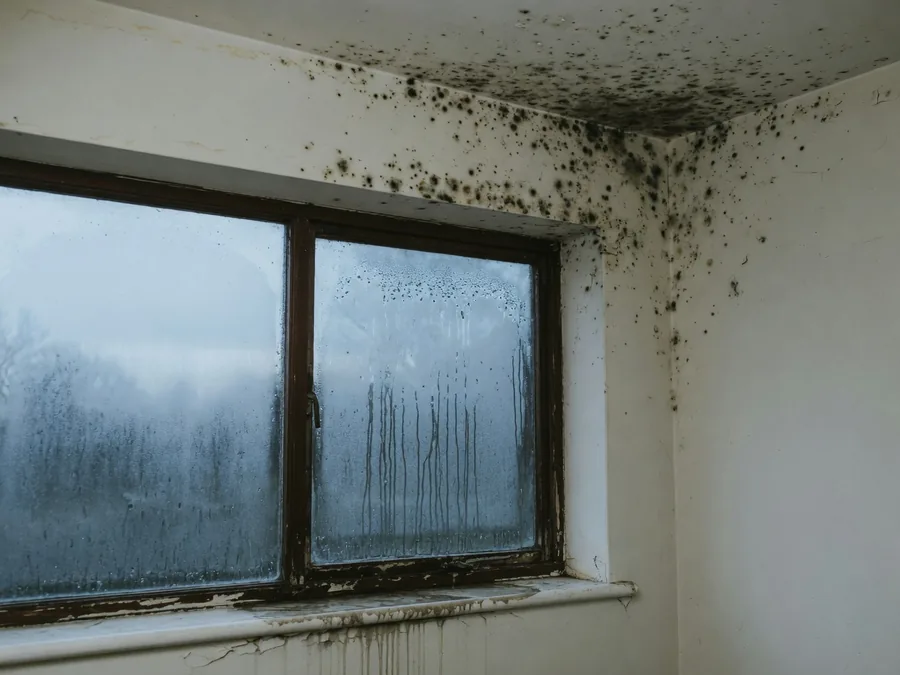
This is the question Rising Damp Adelaide is asked most. In Adelaide it is a genuine question in winter, when cool nights and closed-up rooms produce plenty of condensation in houses that also happen to have real salt damp at the base of the wall.
| Rising damp | Condensation | |
|---|---|---|
| Where on the wall | From the floor up, stopping at a level tide mark | Cold spots — corners, window reveals, behind furniture, often high |
| Salt | Usually present, white bloom or crystals | None |
| Mould | Less common; salt inhibits it | Black spotted mould is the signature |
| Behind the surface | Wet through when metered at depth | Dry behind a wet face |
| Season | Year round, and worse after a wet winter | Winter, and worse in unventilated rooms |
| What changes it | Ground levels, drainage, a failed course | Heating, ventilation, extraction, drying washing indoors |
Condensation is a surface phenomenon. Tape a square of plastic sheet tightly to the wall, leave it a few days, and look at which side is wet. Moisture on the room side of the plastic is condensation coming out of the air. Moisture trapped between the plastic and the wall is water coming out of the masonry, which points at damp. It is crude and it is not conclusive, but it costs nothing and it resolves a lot of arguments.
Plenty of Adelaide houses have genuine salt damp in the lower courses and a condensation problem in the same room, and treating only one leaves the owner convinced the work failed. A decent assessment separates them, prices them separately, and is honest that the ventilation half is usually cheap and largely yours to fix.
The oldest stone stock sits in the inner ring and along the coast, and that is where most of the calls come from.
Tell us what the wall is doing. We will arrange someone to meter it and put the cause in writing.