The mechanism
Groundwater climbing the base of a wall, stopping at a level line. Simple to describe, frequently misdiagnosed, and genuinely different from the other four things that make a wall wet.
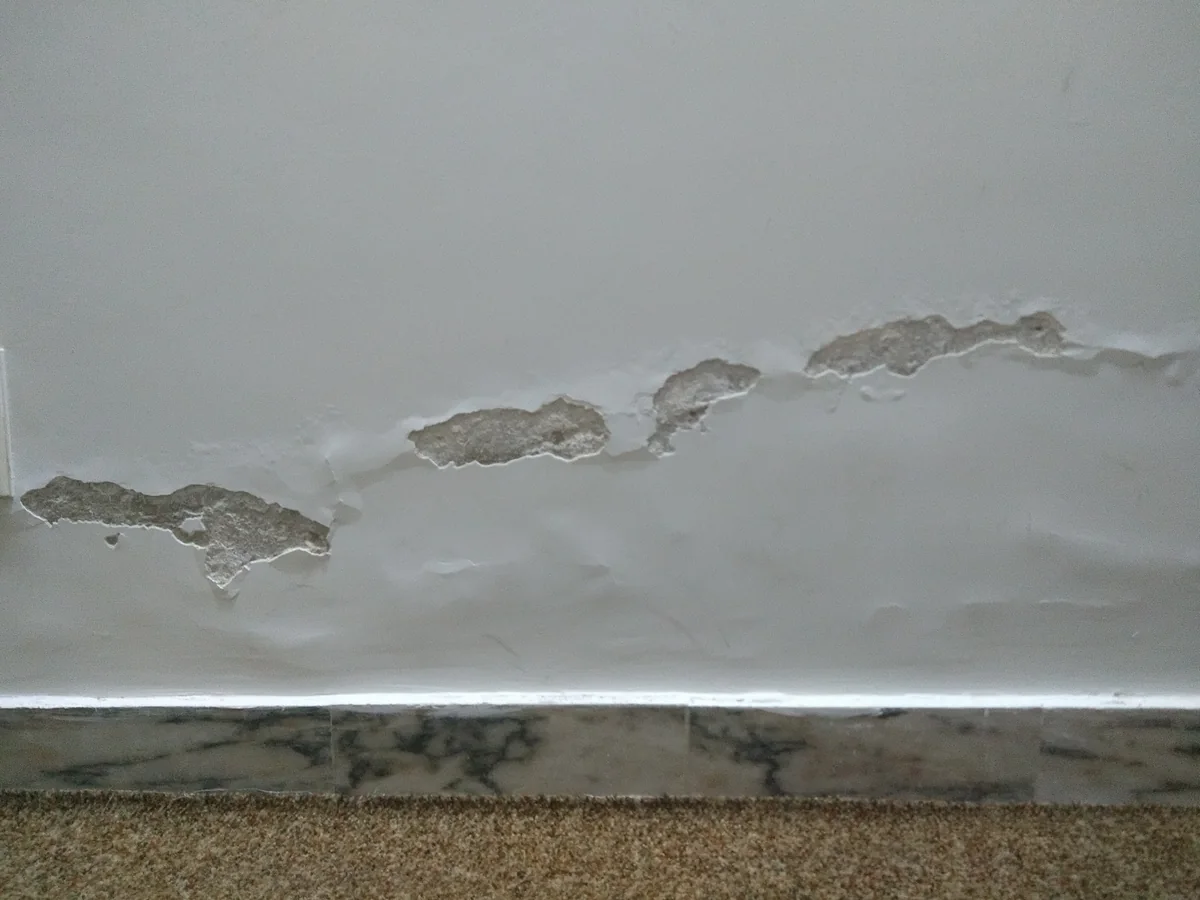
A wall in contact with damp ground behaves like a wick. Water moves upward through the fine pores of masonry against gravity, and it keeps climbing until the supply from below matches the evaporation from the face. Rising Damp Adelaide arranges assessments that establish whether that is what is happening, because four other faults look very similar from across the room.
The height is set by the balance between capillary rise and evaporation, and both are roughly constant along a wall — so the tide mark is level. That single observation separates rising damp from almost everything else. Water from a leaking gutter, a failed shower or a cracked downpipe runs downward under gravity and produces a patch, a streak or a stain that follows the leak. If the boundary is horizontal and holds its height across a doorway, you are looking at rising damp.
A damp proof course is an impermeable layer built into the wall near the base to interrupt that wick. Adelaide's answer depends entirely on when the house went up:
Mostly nothing. Bluestone and sandstone cottages of this period were generally built without any damp course at all, so there is nothing to have failed — the wall is doing exactly what an uninterrupted wall does.
Slate becomes common, bedded into a mortar course. Slate is durable but brittle, which matters a great deal on Adelaide's moving clay.
Bituminous felt and later materials. These generally work, so damp in a bungalow of this era is usually a bridged or cracked course rather than an absent one.
A functioning damp course is the norm. Damp at the base of one of these warrants looking hard at plumbing and levels before anything else.
| Fault | What gives it away |
|---|---|
| Rising damp | Level tide mark from the floor up, salt bloom, wall wet through when metered at depth |
| Bridged damp course | Also level, but the ground, paving or a garden bed outside sits above the floor level inside |
| Lateral damp | Worst on the uphill side, can appear well above floor level |
| Plumbing or shower leak | Localised, often warm, frequently worse on one side of a wet area and unrelated to season |
| Condensation | Cold surfaces, corners and window reveals, black spotted mould, and the wall is dry behind a wet face |
Metering the wall at several heights and depths separates them, which takes about an hour and is the entire reason to have an assessment before a quote rather than after one.
See salt damp for the full explanation, but briefly: the local climate cycles walls between wet and hard-dry, and each cycle deposits more salt inside the masonry. The water is recoverable. The salt accumulates.
The oldest stone stock sits in the inner ring and along the coast, and that is where most of the calls come from.
Tell us what the wall is doing. We will arrange someone to meter it and put the cause in writing.