Bluestone
On an Adelaide bluestone wall the stone is rarely the problem. The joints are, and the most common repair is the one that accelerates the damage.
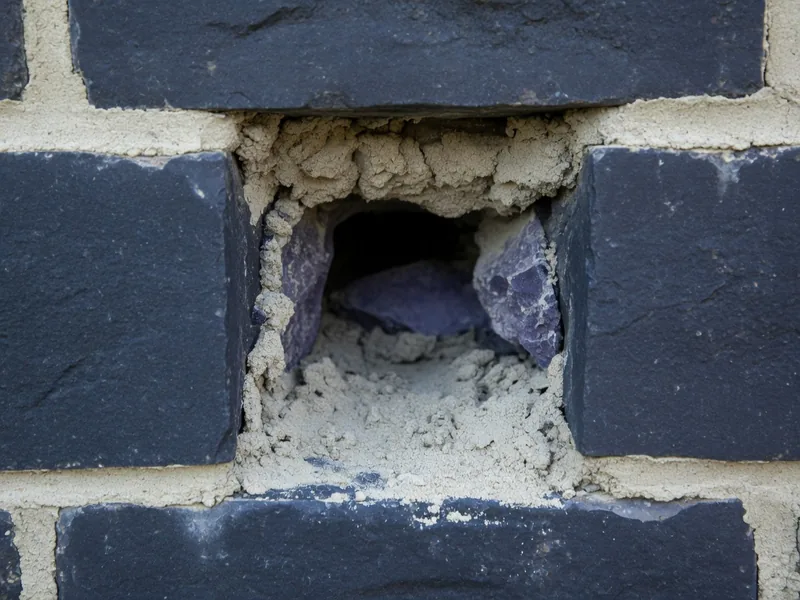
Bluestone is basalt: dense, hard and close to non-porous. That matters more than anything else about these walls, because it means the water cannot travel through the stone. It travels through the wide, soft lime mortar joints instead. Rising Damp Adelaide assesses a lot of bluestone in Unley, Norwood and North Adelaide, and the pattern barely varies.
A traditional lime mortar is deliberately weaker and more permeable than the stone it beds. That is not a shortcoming of old construction — it is the whole strategy. The wall is built so that moisture and salt migrate to the joints and do their damage there, where repointing is straightforward, rather than in the stone, where repair is not. The mortar is the sacrificial component.
So a bluestone wall with raked, sandy joints at the base and immaculate stone above is not a wall that has been neglected. It is a wall doing exactly what it was designed to do, telling you it has been wet for a long time.
Repointing in a hard cement mortar reverses the design. Cement is stronger and far less permeable than lime and, critically, less permeable than the bluestone around it. The moisture still enters the wall — pointing does not stop groundwater rising — but it can no longer leave through the joints. It leaves through the only route remaining, which is the stone.
The results are consistent and expensive: salt crystallising behind the stone face instead of in the joint, spalling that takes chips off the bluestone, and a tide mark that climbs higher than it did before, because the wall's evaporation area has been reduced. Hard pointing also tends to crack away from the stone in sheets, letting water in behind it while looking sound from the footpath.
Deep enough to remove failed and salt-laden mortar, typically two to three times the joint width, without disturbing the stone.
Softer and more permeable than the bluestone. The exact mix depends on exposure, and matching the original is usually the right instinct.
Struck slightly back rather than proud, so water sheds off the stone rather than sitting on a ledge of mortar.
After the source of water is dealt with and after the wall has had a chance to dry, not before. Repointing a wall that is still being fed simply buries the problem in fresh mortar.
This is common and it is not a catastrophe. Removing hard pointing from bluestone is slow, careful work and it is normally worth doing where the stone is already suffering; it is sometimes not worth doing where the wall is stable and the pointing is sound. That is a judgement made at the wall with a meter, not from a photograph, and it is one of the specific things an assessment is for.
The oldest stone stock sits in the inner ring and along the coast, and that is where most of the calls come from.
Tell us what the wall is doing. We will arrange someone to meter it and put the cause in writing.