Semaphore, Glenelg and the Port
Near the water a wall can be loading salt from the ground and from the air at the same time, and the two need telling apart.
Inland, the salt in a damp wall came up from the ground. On the coast that is only half the story: groundwater near the sea carries more dissolved salt to begin with, and salt spray deposits more on the outside face. Rising Damp Adelaide assesses coastal stock differently for that reason.
The profile up the wall is what separates them. Salt drawn up from the ground concentrates near the evaporation zone and falls away above the tide mark, so readings taken at several heights show a clear gradient with a ceiling. Airborne salt deposits fairly evenly over the whole exposed face, and is often worse on the seaward elevation regardless of height and regardless of what the wall is doing at its base.
This matters because the treatments diverge completely. A damp course does nothing about spray. Sheltering, rendering choices and maintenance do nothing about groundwater.
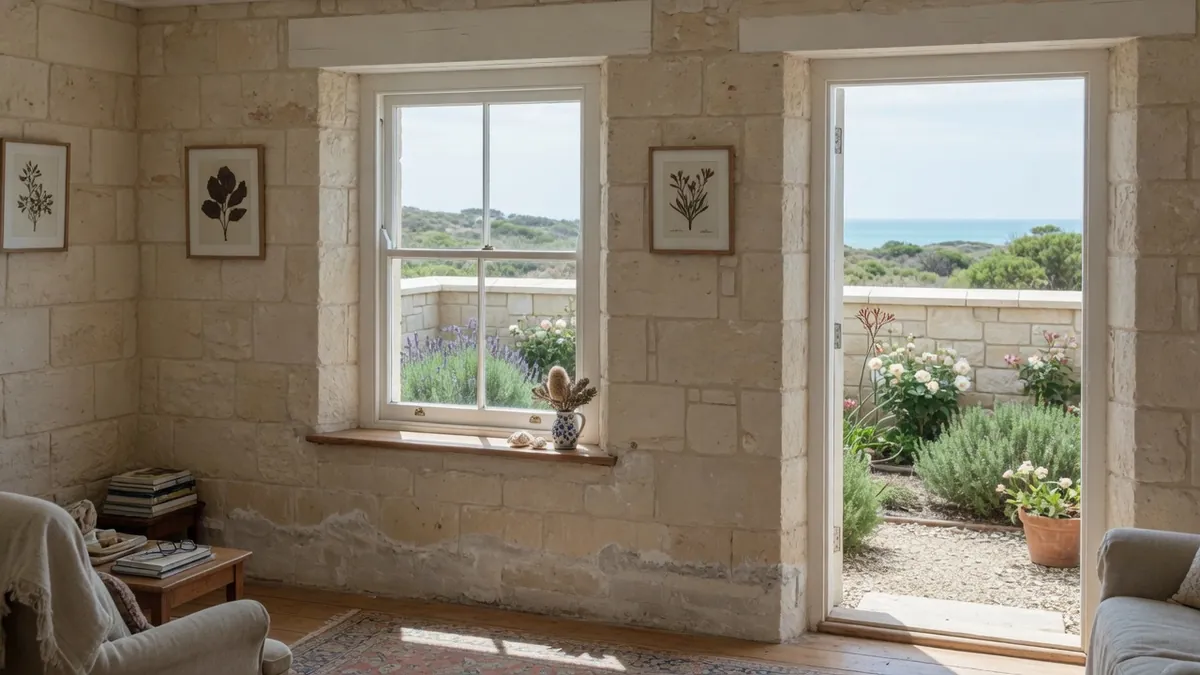
Much of the older coastal stock is limestone, which is soft and highly porous — it takes up moisture readily and shows salt damage early. It also dislikes hard cement repointing even more than bluestone does, for the same reasons and faster. Where limestone is fretting, the case for lime mortar and for leaving the wall able to breathe is close to absolute.
The ground. Sandy coastal soils drain far better than the reactive clay inland, so correcting levels and drainage tends to produce a faster and more visible improvement in Glenelg or Semaphore than the same work does in Goodwood or Prospect. Where an inland job may need the full sequence, a coastal one occasionally resolves with drainage alone — and the assessment will say which you are looking at.
The Port adds low-lying ground and a high water table to thick bluestone walls, some of it commercial rather than residential. Those walls hold an enormous volume of water and take correspondingly longer to give it up once the source is cut. Expectations matter here: the treatment can be entirely correct and the wall will still be releasing moisture and salt a year later. Anyone promising a fast visible result on heavy Port masonry is promising something the material will not do.
The oldest stone stock sits in the inner ring and along the coast, and that is where most of the calls come from.
Tell us what the wall is doing. We will arrange someone to meter it and put the cause in writing.