The named fix
Installing a damp course into a wall that never had one. Effective, widely mis-sold, and not on its own a complete repair.
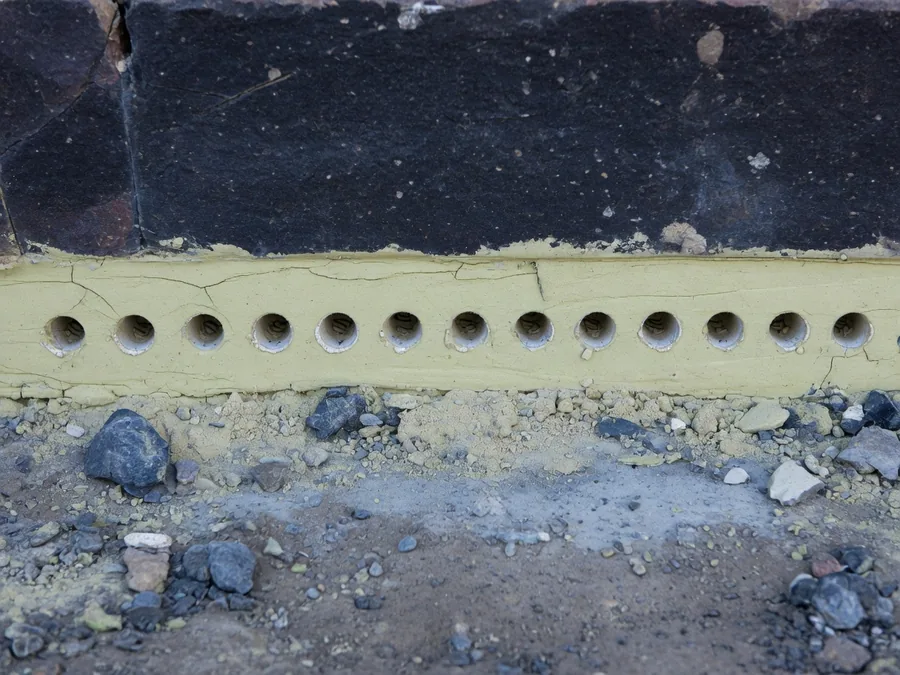
A silicone or siloxane cream is injected into a line of drilled holes near the base of the wall. It spreads through the pore structure and cures into a water-repellent band that interrupts capillary rise. Rising Damp Adelaide arranges this work, and is equally willing to tell you when it is not what your wall needs.
The cream goes into the mortar bed joint, not the stone or brick. On brickwork that is straightforward: a regular course, consistent spacing, predictable spread. On Adelaide bluestone it is considerably harder, because the stones are irregular and the joints vary in width along a single course. Achieving a continuous band means more holes, more product and more judgement, which is exactly why the per-metre rate on bluestone sits above the rate on brick.
A damp course with a gap in it is not a damp course. Water finds the gap. This is the most common reason an injection job fails to deliver, and it is invisible once the holes are made good.
The wall still contains everything deposited over decades. That salt continues migrating to the surface as the wall dries, which is why plaster and paint keep failing after an otherwise successful injection.
If paving or a garden bed sits above the internal floor, water steps over your new course exactly as it did the old one.
Water pressing through a wall sideways from higher ground enters above the course. A damp course is the wrong tool entirely.
Masonry gives up moisture over months. The injection stops the supply; time does the rest.
Levels and drainage first, so the new course is not bridged on the day it cures. Then injection. Then the salt-contaminated plaster and render come off and failed joints are repointed. Then the wall dries — genuinely months, not weeks. Then it is replastered and finished. Compressing that sequence is the single most reliable way to produce a repair that looks excellent for eight months.
On a listed property, drilling into historic fabric may need approval and the method may be constrained. Establish that before accepting a quote rather than after, because it can change both the timeline and the approach — occasionally to drainage and internal management instead of injection, which prices quite differently.
The oldest stone stock sits in the inner ring and along the coast, and that is where most of the calls come from.
Tell us what the wall is doing. We will arrange someone to meter it and put the cause in writing.