Levels and drainage
A large share of Adelaide damp problems begin with ground that sits higher than the floor inside. It is the first thing to check and often the whole answer.
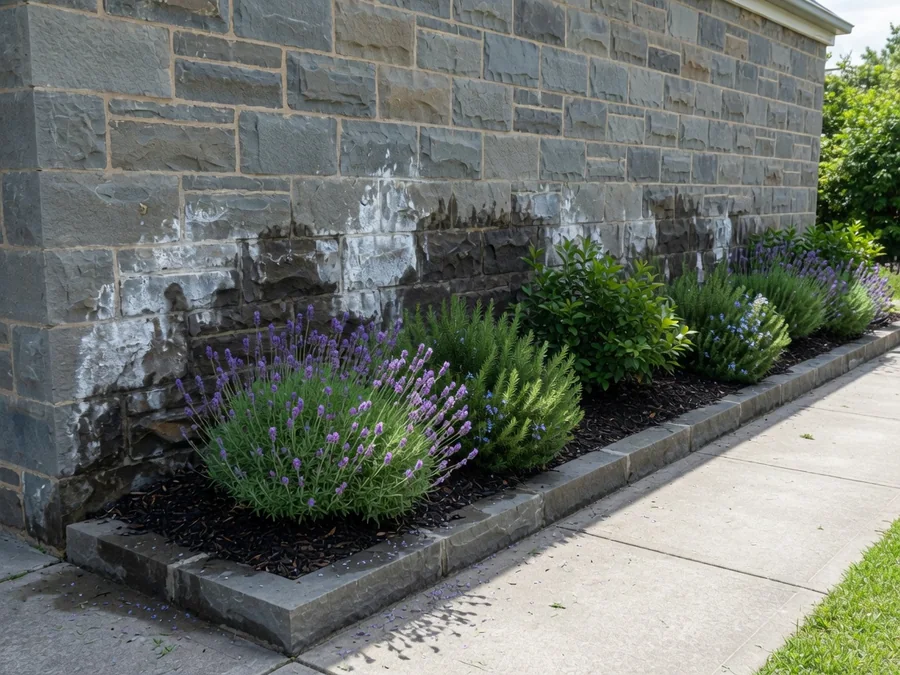
Every damp course, however good, works on one assumption: that the wet ground is below it. Raise the ground and the assumption fails. Rising Damp Adelaide checks this on every assessment. It takes a minute to look at, and it changes the price of the job by an order of magnitude.
Concrete or pavers laid against the wall, frequently over the top of the original level. Very common on Thebarton and Mile End cottages where setbacks are tight.
Soil and mulch heaped against masonry. Also holds water against the wall, which makes it worse than paving of the same height.
Cement render taken down over the damp course to below ground level provides a continuous path for water straight past it.
A slab poured hard against an old wall, or a deck that traps moisture and stops the wall drying.
Regrading, a new driveway or a fresh slab next door can change where surface water goes. Worth asking about when damp appears in a wall that was dry for a century.
At its simplest, cutting the ground back and re-establishing a clear margin below the floor level, with somewhere for water to go. At its more involved, taking up and relaying paving to fall away from the building, installing an agricultural drain, or forming a drained margin along the affected wall. The range in the cost table reflects that spread. See what it costs.
Because a damp course installed under a bridge is money spent on a wall that will still be wet. Any contractor who quotes injection without having measured the outside ground against the inside floor has not done the assessment, and it is a reasonable question to ask them directly before signing anything.
The oldest stone stock sits in the inner ring and along the coast, and that is where most of the calls come from.
Tell us what the wall is doing. We will arrange someone to meter it and put the cause in writing.